
How to Pursue Godly Contentment (Psalm 131)
Introduction
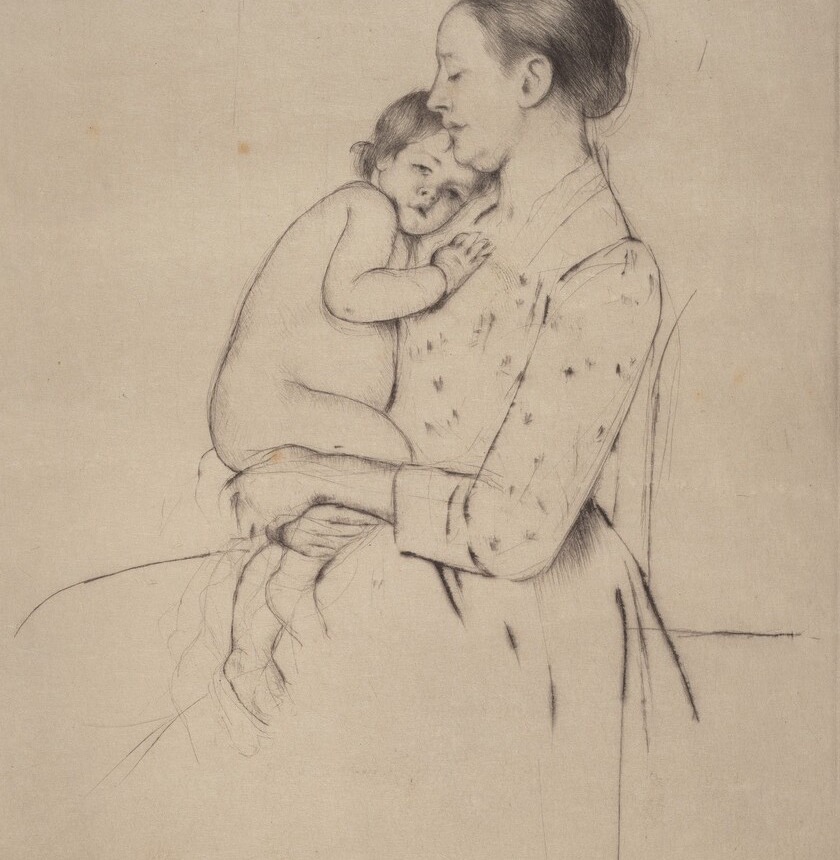
- In the Psalms of Ascents’ five sets of three psalms, we find a theme of distress in the first, power in the second, and security in the third, Psalm 131 speaks of security (cp. Psalms 122, 125, and 128), illustrating it with a weaned child’s secure relationship to his mother.
Psalm 131’s relationship to Psalm 130.
- Their style together with their theme of hope link Psalms 130 and 131. We can fulfill Psalm 131’s lesson for ourselves by living out Psalm 130.
Theme: Contented travelers humbly and contentedly hope in God.
As we approach this psalm, it behooves us to “understand rightly what Psalm 131 describes. This composure is learned, and it is learned in relationship. Such purposeful quiet is achieved, not spontaneous. It is conscious, alert, and chosen. It is a form of self-mastery by the grace of God: ‘Surely I have composed and quieted my soul.’ And it happens in living relationship with Someone Else.… Can you get to this quieted place, here and now, in your actual life? Yes. This psalm is from a man who leads you by the hand. The last sentence of the psalm stops talking with God and talks to you. Psalm 131 aims to become your words as a chosen and blessed child.”[1]
“It is one of the shortest Psalms to read, but one of the longest to learn.”[2]
Outline with Comments
I. The Psalmist’s Personal Piety (Psalm 131:1–2)
A. Keep Yourself Humble (Psalm 131:1)
Personal, fleshly ambition differs from godly aspiration. Our culture glorifies, rewards, and encourages selfish ambition. It is the real American idol.
See, also, Proverbs 16:5; 21:4; James 4:6.
B. Keep Yourself Hushed (Psalm 131:2)
First, let’s identify what this is not. This does not refer to being faint-hearted, spineless, mousy, or unwilling to take on great challenges. William Carey’s axiom (“Expect great things from God; attempt great things for God”) still applies.
Compare Diotrephes in 3 John 9–10.
Compare Powlison’s “Anti-Psalm 131”:
“Self,
my heart is proud (I’m absorbed in myself),
and my eyes are haughty (I look down on other people),
and I chase after things too great and too difficult for me.
So of course I’m noisy and restless inside; it comes naturally,
like a hungry infant fussing on his mother’s lap,
like a hungry infant, I’m restless with my demands and worries.
I scatter my hopes onto anything and everybody all the time.”[3]
Fear of failure and rejection, self-pity, and an unhealthily low opinion of oneself express “pride failing, pride intimidated, and pride despairing.”
How do I compose or quiet myself in the midst of all that I am facing in my life?
- Get a grip on yourself.
- Identify the areas of your pride.
- Silence your desires, opinions, agendas, irritabilities, anxieties, and fears.
- Replace all those things with Christ — focus on Him.
- Look for strength from God to accomplish this — cast yourself on Him.
- Have a psalm-generated conversation with yourself then go to the Lord with that conversation.
- Live out Psalms 130 and 131.
See, also, 2 Corinthians 12:10; Philippians 4:11; 1 Timothy 6:6; Hebrews 13:5.
Weaning consists of breaking the child’s dependence upon his or her mother to satisfy his desires. The relationship blossoms into a love for mother for her own sake.
I must rest in God because I know Who He is and what He has done, not because I know what He can do for me.
II. The Psalmist’s Public Plea: Keep Yourself Hopeful (Psalm 131:3)
See Psalm 130:7.
Compare the following psalms:
- Psalm 113:2 – the LORD is blessed
- Psalm 115:18 – we will bless Him
- Psalm 121:8 – the LORD keeps us
- Psalm 125:2 – the LORD surrounds His people
Conclusion
Three implications for godly contentment:
- “I will not noisily strut about demanding that I be treated as the center of my family or my neighborhood or my work, but seek to discover where I fit and do what I am good at.”[4]
- Learn to desire God for Himself and not use Him to fulfill your desires.
- “When you set your hope in the right place, you become the right size.”[5]
Footnotes
[1] David Powlison, Seeing with New Eyes: Counseling and the Human Condition through the Lens of Scripture (P&R Publishing, 2003), 77.
[2] Charles H. Spurgeon, Treasury of David, Psalm 131.
[3] David Powlison, “‘Peace Be Still’: Learning Psalm 131 by Heart,” https://www.faithlafayette.org/resources/sermons/thanksgiving-rises-from-a-quieted-soul (accessed 14 Oct. 2026).
[4] Eugene H. Peterson, A Long Obedience in the Same Direction: Discipleship in an Instant Society (Downers Grove, IL: InterVarsity Press, 1980), 149–50.
[5] David Powlison, Seeing with New Eyes: Counseling and the Human Condition Through the Lens of Scripture (Phillipsburg, NJ: P&R Publishing, 2003), 88.