
Our Daily Bread
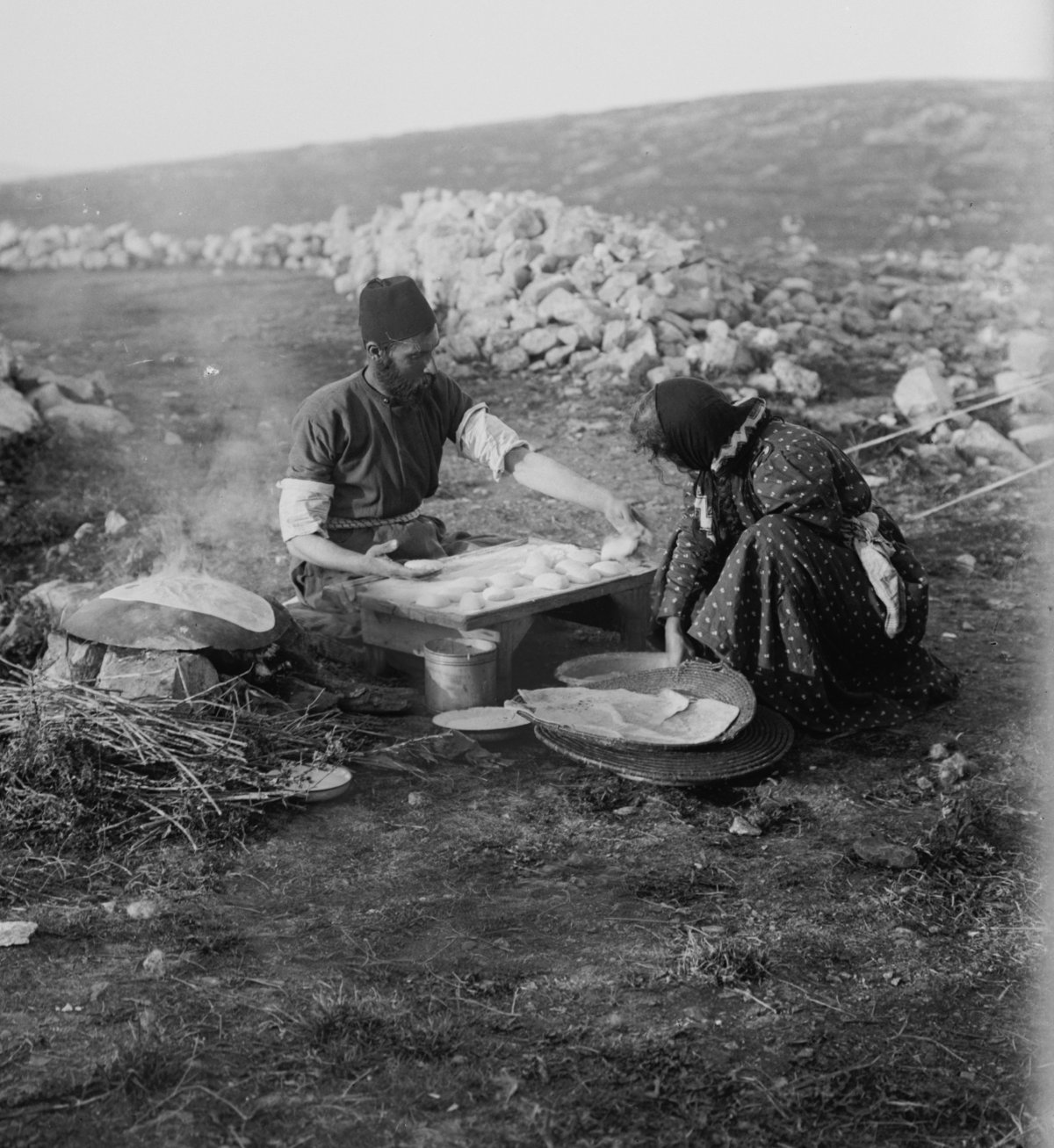

Jesus said, “I am the bread of life” (ἐγώ εἰμι ὁ ἄρτος τῆς ζωῆς, egō eimi ho artos tēs zōēs, John 6:35). He also taught His disciples to pray, “Give us this day our daily bread” (τὸν ἄρτον ἡμῶν τὸν ἐπιούσιον δὸς ἡμῖν σήμερον, ton arton hēmōn ton epiousion dos hēmīn sēmeron, Matthew 6:11). When you read such statements do you picture a freshly baked, oblong loaf of bread like those at the bakery or in your grandmother’s oven? How do you picture “bread” when you read that word in the Bible?
Readers often misunderstand some words in the Bible because we all tend to read the Bible according to our own cultural setting. A few years ago I saw a bookmark depicting a loaf of white bread with the words of John 6:35, “I am the bread of life.” That’s how we most often think of bread. To a person in Central or South America, however, “I am the tortilla of life” would seem more fitting. Perhaps an Italian might think of something more like a long thin loaf of bread or even a pizza. We would think a Bible translator a bit extreme or working too hard to bring the Bible into their own specific cultural context if the text read “I am the tortilla of life” or “I am the pizza of life.” However, the tortilla may be nearer to the kind of bread used in ancient Israel than the modern examples of bread with which we are most familiar.
Naan-ruti/roti and pita identify daily breads of the Indian subcontinent. They are flat breads similar to the tortilla. The Chontal of Mexico make loaves of bread for special fiesta days only. Their daily food consists of the tortilla. Bible translators in those cultures ask whether words for flat breads ought to be used in passages like Matthew 6:11. It is a reasonable question.
Oriental cultures tend to have greater correspondence to the biblical culture than most western cultures. For example, in Bangladesh Bible readers actually have an advantage over readers in the United States because their culture has a greater affinity to the biblical cultures. When we study the cultural setting of the Bible, we find that the thick, light loaf of our western culture was unknown in ancient Israel. Even in modern Syria it is still customary to take a piece of thin, tortilla-like bread and use it to scoop food out of a common dish (see Matthew 26:23).
As shocking as “the tortilla of life” might seem to someone reading this post, such a translation proves accurate. But, for literary reasons we prefer to retain the word “bread” in our translations since it sounds better and is broad enough in meaning to include tortilla-like breads. As we read the Bible we must train ourselves to see it more accurately as something different from what we see on our table in our American home.
When you are reading the Bible, keep asking the question, “What was this item or thing like within its original cultural setting?” Read Scripture cross-culturally in search of its original setting culturally, geographically, historically, and climatologically. It is the best way of placing yourself in that context and in the minds and lives of those about whom you are reading.